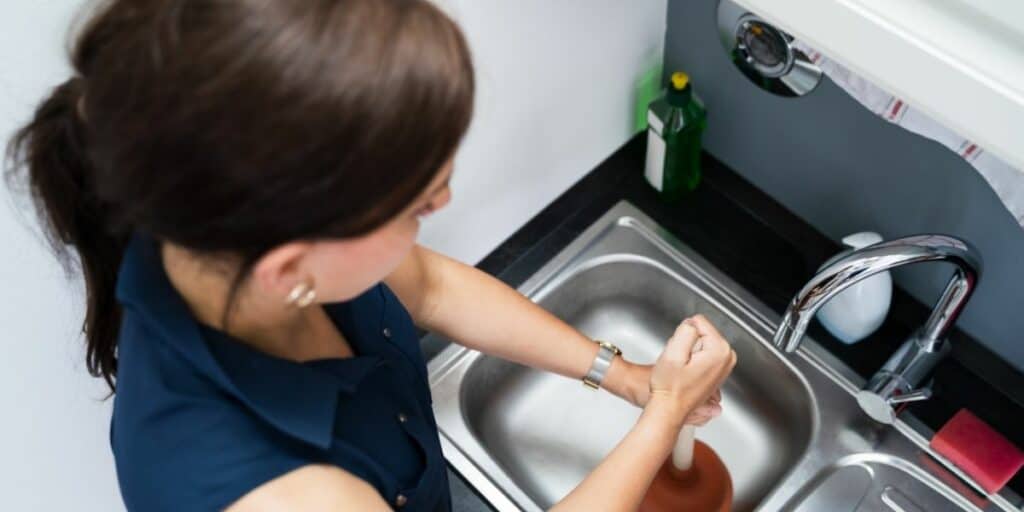
If you’ve ever noticed a strong sewage smell coming from your sink, you’re not alone. This is one of the most common household problems, and it can make your kitchen or bathroom very unpleasant.
The smell usually comes from bacteria, food buildup, or issues inside your plumbing system. In most cases, the problem is not serious and can be fixed easily at home without calling a plumber.
What Causes a Sewage Smell in the Sink?
Understanding the cause is the first step to fixing the problem.
1. Dry P-Trap
The P-trap is the curved pipe under your sink that holds water and blocks sewer gases from entering your home. If the sink hasn’t been used for a while, the water can evaporate, allowing bad smells to come through.
This is especially common in guest bathrooms or rarely used sinks.
2. Food and Grease Buildup
In kitchen sinks, food particles and grease can stick to the pipes. Over time, they start to decompose and produce a strong sewage-like odor.
This buildup is one of the most frequent causes of bad smells.
3. Bacteria Growth in the Drain
Drains are dark and moist, which makes them the perfect environment for bacteria. As bacteria grow, they release unpleasant odors that smell similar to sewage.
4. Blocked or Dirty Pipes
Hair, soap residue, and other debris can clog the pipes. When water doesn’t flow properly, it can trap smells and make them stronger over time.
How to Get Rid of Sewage Smell in Sink
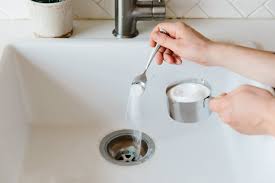
The good news is that you can fix most sink odors using simple home methods.
Method 1: Flush with Boiling Water
Boiling water can break down grease and kill bacteria.
Steps:
-
Boil water
-
Slowly pour it down the drain
-
Repeat 2–3 times
This is the fastest and easiest solution.
Method 2: Baking Soda and Vinegar
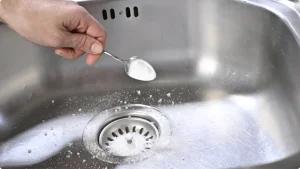
This natural method is very effective for cleaning drains.
Steps:
-
Pour 1/2 cup of baking soda into the drain
-
Add 1 cup of vinegar
-
Let it sit for 10–15 minutes
-
Rinse with hot water
This helps remove buildup and neutralize odors.
Method 3: Clean the P-Trap
If the smell continues, the problem may be inside the pipe.
Steps:
-
Place a bucket under the sink
-
Remove the P-trap
-
Clean it thoroughly
-
Reinstall it
This removes any trapped debris causing the smell.
Method 4: Use a Drain Cleaner
You can also use a commercial drain cleaner for deeper cleaning. However, avoid using strong chemicals too often, as they can damage pipes.
When Is It a Bigger Problem?
Sometimes, the smell may indicate a more serious issue.
Call a plumber if:
-
The smell does not go away
-
Multiple drains smell at the same time
-
You hear gurgling sound
These can be signs of a sewer line or ventilation problem.
How to Prevent Sink Smells in the Future
Preventing the problem is easier than fixing it.
-
Avoid pouring grease down the drain
-
Clean your sink regularly
-
Run hot water after each use
-
Use baking soda weekly
Regular maintenance keeps your sink fresh and odor-free.
Final Thoughts
If your sink smells like sewage, it is usually caused by simple issues like buildup, bacteria, or a dry P-trap. Fortunately, these problems are easy to fix with basic cleaning methods.
By keeping your drain clean and maintaining proper hygiene, you can prevent unpleasant odors and keep your home fresh.